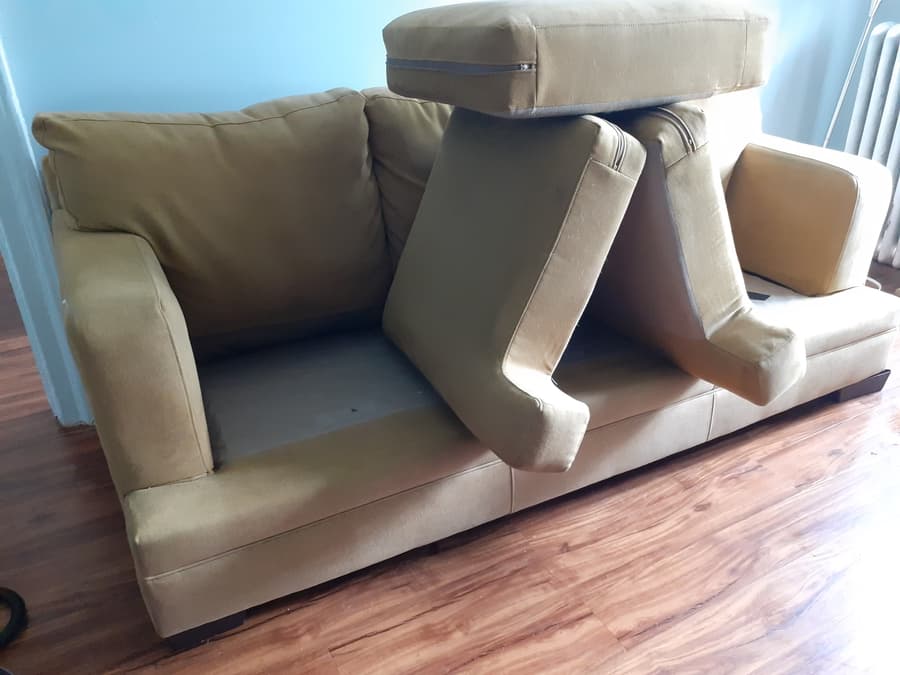
Your living room sofa can be compared to a giant magnet that captures dust, allergens, and grime. In fact, did you know that sofas can absorb an incredible 80% of household dust mites and bacteria? This also means that a dirty sofa can negatively affect your health.
A dirty sofa can worsen allergies and also increase your risk of developing respiratory problems. Dirt will also shorten the lifespan of your sofa and dull its appearance. But what can you do about these problems?
Understanding Why Sofas Need Professional Cleaning
Key Facts From Research
You can think of your sofa like a car engine. It needs routine oil changes to prevent breakdowns. Skipping these changes can lead to costly repairs or early replacement. In this analogy, professional cleaning is the oil change.
You see, your sofa traps pollutants in the air. These pollutants include things like dirt, dust, non-living allergens, fluids, grime, pet dander, bacteria, and dust mites. These damage your sofa over time by degrading the fabric. This can lead to discoloration, odors, and fabric breakdown. These pollutants will also impact indoor air quality.
In high-humidity areas, dirty sofas may even become moldy. This happens because moisture gets trapped in the fibers and allows for the growth of fungal spores. A dirty sofa also impacts health. This is because of allergens like dust mites. These mites can trigger asthma, allergies, and respiratory issues. All this can be prevented by having your sofa professionally cleaned. Routine cleaning also extends sofa life by preventing the accumulation of these pollutants.
Scientific/Mechanistic Explanations
Dirt and oil bond to fabric fibers via electrostatic attraction. This can be compared to magnets pulling metal shavings. Professional cleaning methods use ionized or alkaline solutions to break this bond. This process attracts and lifts grime without leaving anything behind.
This is important. DIY cleaning with soap often leaves behind a residue. This can make things worse because soap residue is sticky and attracts dirt. This is similar to how static cling draws lint to clothes. Professional cleaning avoids this by rinsing with neutralized soaps and carbonated water/vinegar mixes. This mixture fizzes and the dirt is extracted.
Factors Which Influence How Often Your Sofa Should be Professionally Cleaned
This will depend on how often it’s used. If you’re in a low-use home, then once a year is enough. If you live in a household with kids and pets, then your sofa should be cleaned at least twice a year. High-traffic sofas accumulate dirt faster, meaning you’ll have to clean more often.
Studies also show that people with pets have 2-3X more allergens. This necessitates more frequent cleanings in order to maintain hygiene. The material that you sofa is made from will also determine cleaning time. Fabric sofas trap more allergens and should be cleaned every 6-12 months. This is because they are porous like a sponge. On the other hand, leather requires conditioning twice yearly to prevent cracking, but needs cleaning less often. You’ll also want to clean your sofa if you have visible stains or discoloration, unpleasant odors, allergy flare-ups, excessive pet fur shedding, or noticeable dirt/debris.
Comparisons and Expert Views
Many professional cleaners compare sofas to air filters. Your home HVAC filter is changed every 3-6 months and your sofa needs a similar reset. This is why experts recommend professional sofa cleaning at least once a year. Hiring a professional is better than doing it yourself. Professionals are more efficient and know how to clean your sofa without damaging it.
Professional cleaning services can also extend your sofa life by removing wear-causing agents. This makes cleaning cost-effective in the long run when compared to the cost of replacing furniture. (This is backed up by studies which show that dirty sofas degrade 20-30% faster.
You can think of sofa cleaning like scheduling annual doctor check-ups. Even if you feel fine it’s still a good idea to go. Getting regular check-ups prevents small issues from turning into bigger problems.
Table for Comparison:
| Household type | Recommended Frequency | Reasons |
| Low-use (no pets/kids | Every 12 months | Minimal dirt accumulation focuses on maintenance. |
| Average use | Every 12 months | Balances dirt from daily sitting, prevents deep-set issues |
| With pets/children | Every 6 months | Higher allergens/spills, reduces health risks like asthma |
| Allergy-prone | Every 6 months or sooner | Extracts mites/bacteria, improves air quality |
Step-by-Step Professional Sofa Cleaning Methods and Their Effectiveness
Pre-Cleaning Assessment
Professional cleaners begin by inspecting for material type i.e. do you have a fabric or leather couch? They also look for stains and test cleaning solutions on hidden areas. This avoids damage later on. They then vacuum the couch thoroughly to remove loose debris. This prevents you from impacting dirt deeper during wet cleaning.
Deep Cleaning Process
Cleaners apply pre-treatment to the couch. This is made up of hot water and an alkaline spray. This pre-treatment loosens dirt. The Alkaline/ionized water attracts grime via pH imbalance (high pH breaks oil bonds like baking soda dissolving grease in cooking). This process lifts dirt kinetically and the dirt is loosened via motion, while vinegar neutralizes residues chemically and prevents re-soiling.
The sofa is scrubbed with brushes and the suds extracted with machines for a residue-free rinse. With this process your couch dries in 1-2 hours vs. 1-2 days. The risk of mold is also reduced. This process is almost the same as washing clothes. You pre-treat the stains, agitate, and then rinse thoroughly to avoid soap build up.
The result is a sofa that looks as good as new. Your sofa should also have a brighter color and fresher smell. Professional cleaning also reduces allergens and can extend the life of your sofa by 20-30%. All this is accomplished simply by removing the dirt.
Benefits, Risks, and Limitations
Benefits
Professional sofa cleaning is extremely beneficial. It makes the environment you live in healthier by reducing allergens and asthma triggers. Professional cleaning also saves you the time and effort of doing it yourself. Your sofa will also stay cleaner for longer without residue attracting dirt. Sofa-cleaning is also a lot more cost-effective in the long run because you avoid repairs. Finally, a clean sofa just looks better.
Risks and Limitations
The biggest risk is over-wetting the sofa. This can lead to the growth of mold if the water is not extracted properly. H2O2 can lighten fabrics if not diluted correctly and rinsed off. Something else to remember is that not all stains are removable. Many fabrics are also delicate and will require specialist care.
Conclusion
Your sofa should be professionally cleaned every 6-12 months based on usage. People with pets and children should clean more often. Once every 6 months is recommended. This helps combat allergens as well as wear and tear. People in low-traffic homes will need to clean less often. We recommend once a year to maintain air quality and longevity.
But no matter how often you clean, always remember that this task is best left to professionals. Experienced cleaners can do a better job. With pros you ensure a deep, residue-free clean that DIY can never match. Regular professional intervention extends the life of your sofa and transforms it from a dirt trap to a clean, healthy haven with reduced allergens and brighter, longer-lasting fabric.